

How To Stop My Windows From Condensation
Condensation on windows is common in all types of homes. Though not just reserved for winter, it's more prominent at that time of year, as the absurd weather condition outside leaves window panes and the air pockets in-between double glazing at a much lower temperature compared to the airflow within our homes. Here's how to terminate condensation in your home – more specifically, on your windows.
Condensation on the within of windows is really dissimilar from other forms of dampness, such equally rain and rise clammy. Information technology is h2o released when air is cooled to its dewpoint temperature and unable to carry so much moisture as vapor – the contrary process to evaporation.
So this can happen indoors whenever warm, clammy air comes into contact with colder objects, like windows. If not dealt with, condensation will have y'all reaching for the best cleaning products and looking for means to get rid of mold quickly and at worst, dealing with wood decay or an unhealthy living environment.
James Mokler, Retail Banana Product Director at Kärcher (opens in new tab) explains, 'The build-upwardly of condensation occurs when the air inside of the room is warmer than the surface temperature of the window (or whatever surface). Equally most are turning up their heating during the colder months and keeping up with daily activities such as cooking, showering, even breathing, condensation builds upwardly faster and at a more frequent rate.'
Edifice and structure skilful, Thomas Goodman at MyJobQuote (opens in new tab) adds, 'Typically actualization on windows and doors, condensation can also form in unventilated spaces such as wardrobes and cupboards and cause clammy. In fact, condensation is the most common crusade of clammy in buildings and, if left untreated, can crusade black mold, which is harmful to our health.'
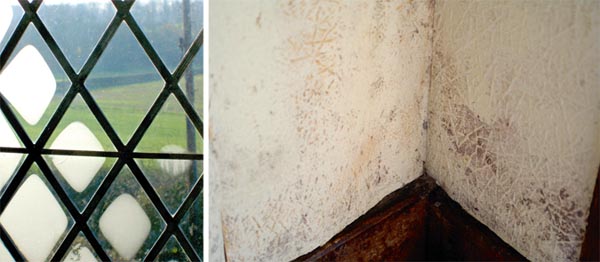
Condensation has formed on windowpanes (left); condensation-related mould on walls (right)
Is condensation on windows bad?
'Unwanted moisture in homes tin can crusade structural and aesthetic damage such as mold, damp walls, and ceilings, rotting windowsills and frames, and can be plush to prepare if not dealt with early on. Mold and damp also pose a health risk. According to the NHS website (opens in new tab), if there is damp and mold in a home, the occupants are more likely to accept respiratory problems such equally asthma and allergies leaving babies, children, and the elderly virtually at gamble*.'
At that place are ways to tackle condensation on windows that tin successfully go the moisture balance back in your dwelling house, to preclude time to come condensation on the inside of different types of windows.
Douglas Kent, technical and research director for the Society for the Protection of Ancient Buildings (SPAB), gives united states his expert guidance and insights on the causes of condensation in houses and how to avoid them.
How to stop condensation on windows
In homes old or new, simple lifestyle changes that lower humidity and/or keep surface temperatures higher up dewpoint will be more than practical and a less expensive long-term solution than installing whole-business firm ventilation systems.
'Preventing condensation volition help keep your home free from damp and mold and can even save yous money in the long run, equally the longer you leave condensation the worse the problem will inevitably gets,' says Goodman.
Effort these tips below:
i. Ventilate your domicile
The key is to generate less moisture but some is of course inevitable. So, open windows where you can and avoid typhoon-proofing windows in kitchens and bathrooms.
This is especially important if you live in a pocket-sized, open up-plan flat without an efficient extractor fan or air bricks, equally there's nowhere for all the moisture to go. So, open the windows frequently, especially when cooking, and scissure them open while you're in bed.
Mokler recommends even opening the windows for just 20 minutes a day as this can be enough to drastically reduce the furnishings of condensation and dampness in homes.
Ensure too that lofts, floor voids and redundant chimneys are well ventilated and avert foam treatments on the underside of roofs that tin can cause timber disuse.
two. Keep heating on abiding
Increased home heating systems can maintain surfaces above dewpoint, peculiarly if run constantly at a low level, rather than intermittently. Lagging common cold pipes may prevent surface condensation, as tin can improved insulation levels.
So to end condensation from forming, keep your heating on a low setting throughout the colder months. Temperature fluctuations, especially the temperature plummeting effectually dawn, are very often responsible for condensation forming on windows.
'Ensuring that in that location'due south a regular warm temperature around your home will stop surfaces from getting cold plenty for condensation to build. The heating doesn't need to exist on constantly throughout the day, but a timer tin can be used to switch on the heating during the coldest periods, keeping surfaces warm and preventing condensation from forming,' says Mokler. The trick is not to smash your home with hot air for short periods of time and exit information technology cold the residue of the time. An even, continuous low oestrus setting is ameliorate.
Goodman did caveat this suggestion though, saying, 'This may non be a elementary option, especially as heating prices are ascension rapidly – but keeping your heating on low, rather than intermittently turning it on high, can help in preventing condensation. However, this shouldn't be used equally a permanent solution, due to the high cost and energy level used.'
In that location are of course other means to save energy at dwelling house where yous can.
3. Invest in better insulation
(Paradigm credit: Shutterstock)
'If condensation is a recurring issue in your home, information technology may be worth investing in reinsulating the walls of the house, and window insulation. This will non only keep your abode warm and reduce costs for heating, but having skillful insulation profoundly determines how much condensation builds up and how long it takes to dry,' notes Mokler.
Goodman is in agreement, 'Improve your abode'due south insulation – this is more of a long term solution that can exist costly. However, there are ways to amend your domicile on a budget. I of the most expensive methods is to upgrade to double glazing windows and doors, as this provides better thermal insulation both in and outdoors. The well-sealed frame likewise reduces heat loss and air leakage.'
'Ensuring your walls and lofts are properly insulated can as well help forbid condensation from forming. Common cold spots on walls and ceilings increase the chance of condensation, as there'south more take chances of warm air reaching them.'
4. Try anti-condensation paint
Goodman told us, 'Anti-condensation pigment is a thick paint that adds an extra layer of insulation to your walls, making it the perfect insulation solution if you aren't able to really insulate your walls. It works past adding an extra layer of insulation to walls and prevents condensation from building upward. Some paints are used every bit a pre-pigment seal, whereas some are thick enough and tin can be colored to use equally your main coat of paint.'
Ronseal anti-condensation pigment (opens in new tab) is piece of cake to apply and does the job.
5. Start cooking with lids
If ventilation is a piddling poor in your dwelling house and in the kitchen more than specifically, try and melt with lids on to cease the steam escaping and then much.
'Keeping windows open during activities that cause a lot of moisture in the home such as cooking, showering, and drying dress, specially if yous don't have great ventilation, can assist minimise condensation,' Mokler as well recommends.
vi. Dry wearing apparel outside
Conditions and residence-permitting of class, but damp laundry in an unventilated room is a recipe for water aerosol on those windows of yours (and a musty smell as a effect of that).
'Avert drying dress indoors if you can,' says Goodman. 'Although this can be difficult, particularly during the winter where drying clothes outside isn't an selection, drying your clothes indoors can create condensation and damp bug, especially if y'all don't take steps to properly ventilate your home while drying. To forestall such problems, opt for an extra spin wheel on your wash to help excerpt excess water and make your clothes dry quicker.
'If you have no option but to dry indoors, for example if you live in a flat, and then ensure yous position your wearing apparel in suitable weather. Place your drying rack in front of a bright window to assist dry faster and create a well-ventilated area to forestall condensation.'
Of course, using one of the best washer dryers will make this easier and more manageable, too.
7. Go on humidity in its identify
Shut kitchen and bathroom doors when in employ to trap humidity in its tracks.
'Drawing in wet from the room before it has time to manifest can be an like shooting fish in a barrel way to combat condensation. Some unconventional methods include putting cat litter in a sock, tying it up and placing it on a windowsill. Putting a bowl of salt on the windowsill has also proven to be a skillful hack,' says Mokler.
8. Keep dryer vents articulate
Go on vent tumble driers to the outside if they are not of the condenser type. And, be sure to clean your dryer vent oft to go on information technology doing its job efficiently.
nine . Reject your humidifier
If you're using a humidifier, and condensation has recently get a problem, try to turn it down for short periods at a time until you meet an improvement.

(Epitome credit: Duronic)
10. Or, choose a dehumidifier
'Those in Victorian properties or more traditional homes wouldn't be without one of the best dehumidifiers effectually, equally older homes are more decumbent to damp and condensation,' Mokler said, 'If you're able to invest in this solution, at that place are some great humidifiers on the market which absorb all the moisture in the air.'
You might non want a dehumidifier running at night in a bedroom, but if you put yours on later you get up and fourth dimension it to switch off an hour or and then afterward, it'll stop condensation and its furnishings from becoming a problem. And in case you lot were wondering, dehumidifiers use very little free energy (much less than tumble dryers) to run, so y'all won't come across a large hike in your energy bills.
11. Open your drapes
Ane of the biggest tips for how to stop condensation is to continue your drapes open to terminate trapping moisture and heat on the window panes. This is particularly important in rooms like bedrooms, where droplets can build upward overnight.
This volition end wet drapes besides which is never dainty.
How do you stop condensation on windows overnight?
It is vital to actively tackle condensation before the problem worsens and, luckily, there are plenty of easy fixes to reduce and prevent condensation overnight, without needing besides much work.
Open your windows
By keeping your windows open, you let the boiling air to circulate the room and escape exterior. Opening the windows at night, when the exterior air is at its lowest damp level, is key as you lot will release the warm, damp air inside and lower your home's humidity level.
Keep your curtains open
Keeping defunction open allows air to circulate against the window, which prevents condensation from forming. If keeping defunction open overnight is hard, for example, due to streetlights or privacy concerns, then simply investing in thinner curtains can still have an touch, especially if y'all proceed your windows open too.
Leave the exhaust fan on
A mutual mistake people tend to make is only keeping exhaust fans on while cooking or during a shower. Even so, leaving it on for longer, ideally overnight, works much better in preventing condensation, as it allows air the chance to properly circulate the room, which reduces condensation,' advises Goodman.
Should I wipe condensation from windows?
You can wipe away condensation on windows using a microfiber cloth but you tin likewise use a window vacuums, similar the Kärcher WV (opens in new tab) to quickly remove excess water from inside windows.
'They're as well a great time-saver as the powerful and rechargeable lithium-ion bombardment can make clean up to 75 windows on one accuse. What's more, window vacuums can be used on any flat surface in the home including windows, showers, and mirrors, ensuring they all stay spotless and streak-free,' says Mokler.
Why do I get so much condensation on the within of my windows?
This is all due to the moisture levels in your domicile, simply it could also be that the moisture is managing to seep through between both window panes as the sealant is sometime and worn. If it'due south quite saturated, consider replacing your windows or the sealant. Otherwise, you should be able to sort it out using the above tips.
Is condensation on windows normal?
It is totally normal. Condensation can arise when more moisture is produced – often from cooking or washing. Bereft ventilation is the primary cause, for case, due to double-glazing, blocking of flues and air bricks, or incorrect installation of roofing underlay.
Condensation occurs mostly in winter, just can announced throughout all seasons depending on your dwelling and climate. It might first exist noticed when h2o droplets class on hard surfaces, or mold appears on absorptive finishes.
What is known as 'interstitial' condensation occurs within the building materials and elements. For example, if a wall is covered with an impermeable barrier or render that doesn't allow moisture to pass through the wall naturally.
If the condensation problem you have seems to be more than one yous tin can solve yourself, information technology volition be worth employing an independent chartered surveyor or consultant (not a contractor with a vested commercial involvement); they can comport out a more than detailed investigation if required.
Source: https://www.realhomes.com/advice/how-to-cope-with-condensation
Posted by: bradshawroyague1995.blogspot.com
0 Response to "How To Stop My Windows From Condensation"
Post a Comment